
Bengal's oldest jewellery wasn't dug from a mine. It was shaped from river clay and fired — or beaten from brass in a smith's lane. Both traditions are alive, and lighter on the earth than anything in a vault.
Terracotta — clay, fired
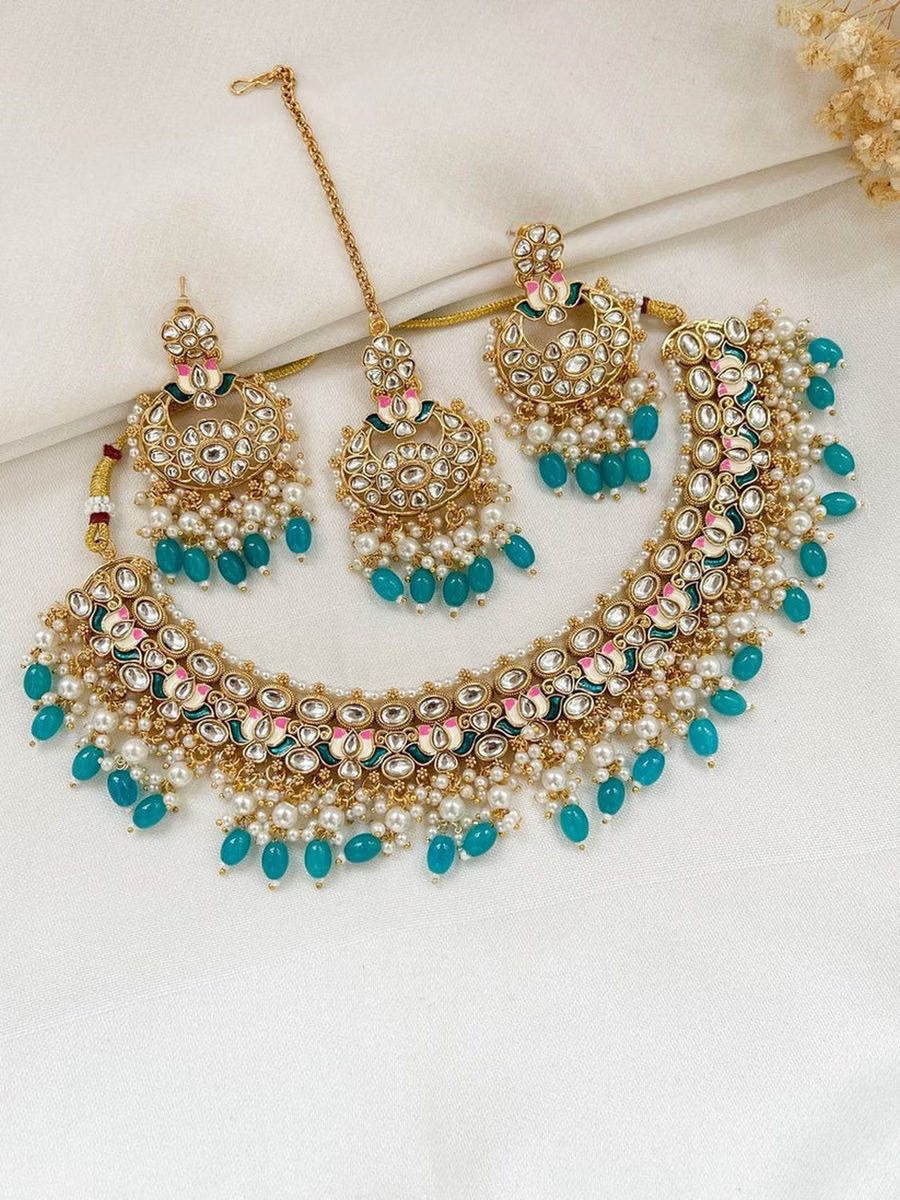 A hand-shaped terracotta bib necklace
Each bead and pendant is hand-shaped, sun-dried and kiln-fired in Bikrampur. Terracotta jewellery is feather-light, warm-toned, and surprisingly strong — bangles that survive decades of Pohela Boishakh.
Brass — the goldsmith's cousin
Jhumkas are raised from flat brass sheet: pierced, chased and domed by hand in Dhamrai, a town that has worked metal for four centuries. Brass mellows to a soft antique gold; a minute with a dry cloth brings the brightness back.
Why we love it
- No mining, minimal footprint — clay and recycled brass
- Featherweight comfort for all-day wear
- Every piece individually made, with the small differences to prove it
“Gold borrows its value from scarcity. Clay earns it from hands.”